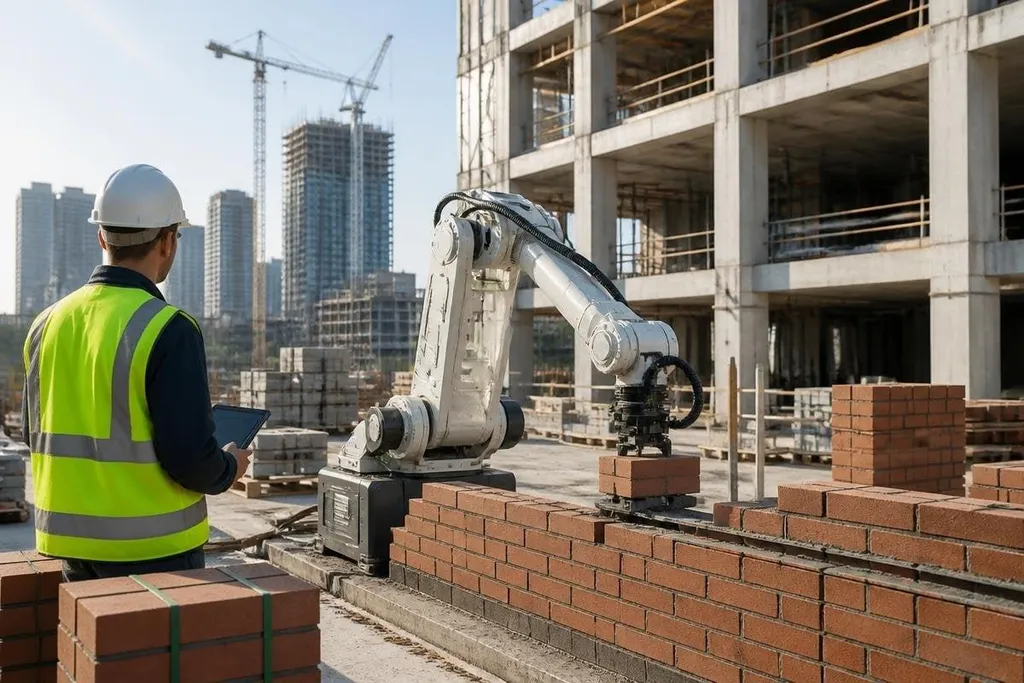
Construction robots could shorten building work by taking on repeated tasks such as brick placement, concrete finishing, drilling, and site inspection. The harder question is where they can work safely and reliably, because a building site changes every day.
Quick read
- Robots fit best where the same motion happens many times.
- Site setup, weather, power, and safety checks can erase the time saved.
- Human crews will still need to plan work, handle exceptions, and approve results.
The work robots can repeat
For each wall section, floor opening, or drilled hole, a robot can follow the same path. That repeatable motion gives builders a clear place to start, since the task can be measured before the robot arrives.
Bricklaying is one example. For this task, a robotic arm can pick up a brick, place it in a set position, and repeat the movement while software checks the planned wall shape. The system still needs a steady supply of bricks, a clear work area, and a person who can fix a bad placement.
Concrete work has a similar pattern. On a planned surface, the robot may spread, smooth, or inspect material. The result depends on the mix, temperature, moisture, and timing, so the robot needs sensors and rules for stopping when conditions move outside the allowed range.
That same method applies to drilling, painting, scanning, and moving materials over a set route. These jobs become useful robot tasks when the work can be described with a path, a tool, and a clear check at the end.
Why a site slows the machine down
A factory gives a robot fixed floors, known parts, and controlled lighting. A construction site gives it temporary surfaces, changing layouts, loose materials, people, and machines moving through the same space.
That difference matters more than the arm or wheels. Using LiDAR, which measures distance with laser pulses, a mobile robot may map the work area. Yet a map can change when a crew moves a stack of panels or places a lift in the robot’s route.
Power is another practical limit. With a wired robot, the cable route must stay clear as the building rises. A battery robot needs charging time or spare batteries, so either choice adds planning work for the site team.
Safety also changes the pace. Near workers, a drilling robot needs a way to detect people, stop its motion, and restart only after the area is checked. The safety plan must cover the robot, its tool, nearby machines, and the task itself.
Where the time saving may appear
Robots could help most when they keep a crew from waiting on repetitive work. A machine that prepares a surface overnight may let people begin the next task sooner, but that gain depends on inspection, access, and the handoff between trades.
The largest benefit may come from better planning rather than raw speed. A digital model can give the robot a target path, while sensors check the real structure and flag differences. A worker can then correct the plan before the next section is built.
A construction robot’s result needs the site details around it: the task, build time, worker support, and rework. Construction robotics reports from Robot24.com can put those facts beside the finished section, giving the next comparison something measurable.
No broad claim about faster cities should rest on a video of one clean task. A useful report would show the site conditions, human support, downtime, rework, and the result against the usual manual process.
The open questions
Cost will shape adoption. Transport, setup, software, tool changes, training, maintenance, and a person who can respond when the plan fails all add cost beside the purchase price.
The work also has to stay within a robot’s reach and load limits.
A design that works on a low wall may need a different arm, base, or lifting method on a higher floor. Construction firms will need machines that can move as the building changes, not only machines that work beside a finished frame.
I’d back construction robots first in controlled tasks with clear checks, not as general replacements for site crews. The unproven part is whether one system can keep that advantage across different sites, weather, layouts, and trades.
A practical test for a project
Before putting a robot on a site, check these points:
- Repeatable task: Can the job follow the same path for many work cycles?
- Clear workspace: Can people, tools, and stored materials stay outside the robot’s path?
- Known result: Is there a simple measurement that shows whether the work passed?
- Power plan: Can the site support charging, batteries, or a safe cable route?
- Human handoff: Who checks the work and fixes errors before the next trade starts?
- Failure plan: What happens when a sensor loses its view or the robot stops?
A project that passes these checks has a better starting point than one chosen because the robot looks fast in a controlled demonstration. The next useful proof will be a construction site report that shows completed work, downtime, rework, and total labor across a full build phase.